Quick answers (read this first)
- Money comes from a small crop loop you actually water, plus forage and optional rainy fishing—not from clearing the whole farm on day 1.
- Sell extras; keep a few crops/forage for Community Center candidates.
- First “big” buys: seeds to refill the patch and usually the backpack before cosmetics.
- Do not dump gold into Vault bundles or Traveling Cart FOMO while you still need Summer seed money.
- If mornings feel impossible, shrink the farm—not your sleep schedule.
Who this is for (and who should skip)
Use this if you just started, feel broke every afternoon, and want a simple Year 1 cash rhythm.
Skip or skim if you already run ancient-fruit greenhouse spreadsheets. This page is for solvent beginners, not max gold/day charts.
Version note: Written for Stardew Valley 1.6-era QoL. Confirm shop prices in-game—we do not invent profit-per-day charts.
From our Year 1 save (real pitfalls): We sold almost every edible forage for quick gold, then hit Exhausted with nothing to eat. Keep two snacks. Gold from a shipping bin can wait one night; fainting costs more dignity than 50g of leeks.
Pros & cons of a calm money plan
| Details | |
|---|---|
| Pros | Less restart urge; steady seed money; upgrades match real pain points; works in short play sessions. |
| Cons | Slower than aggressive fishing/mining min-max; your farm will look “small” compared to showcase videos. |
| Use when | First playthrough, or you keep going broke after impulse buys. |
| Skip when | You already know your preferred money route and only need exact crop tables. |
Interactive checklist
Tick as you play. Native checkboxes work with JavaScript off; refresh clears ticks (no save).
Safe to skip (anti-FOMO spending)
- Buying furniture and decorations in week one.
- Paying Vault gold bundles while your patch still needs seeds.
- Clearing every rock/tree before you have a watered crop loop.
- Buying every tool upgrade the day it appears.
Decision table: where the next gold goes
| If you feel… | Spend on… | Wait on… |
|---|---|---|
| Inventory full before noon | Backpack upgrade | Cosmetic farm stuff |
| Mornings are only watering pain | Watering can upgrade (when the patch is real) | Expanding to a huge field |
| Patch is empty / season changing | Seeds for the next season | Vault bundles |
| You are close to minecarts / greenhouse progress | Only the missing bundle pieces you already hunt | Random cart curiosities |
A calm Year 1 spend order
Use this as a priority ladder, not a shopping list you must finish by Spring 14. Climb one rung when the pain above it is already handled. Confirm prices in Pierre’s, Clint’s, and Pierre’s backpack counter on your save—numbers move with context, and we will not invent a guaranteed gold-per-day chart.
| Priority | Spend on | Why it sits here | Skip / wait signal |
|---|---|---|---|
| 1 · Seeds | Enough to refill the patch you can actually water | Empty dirt earns nothing; dead overplanted fields cost energy | Buying every seed type “for science” while the can already hurts |
| 2 · Backpack | First inventory upgrade when slots fill before noon | Dropped forage and ore are silent losses; stress rises fast | Buying cosmetics while you still leave items on the ground |
| 3 · Key tool | The upgrade that removes your daily pain (often watering can; sometimes pickaxe/axe) | QoL compounds every morning once the loop exists | Upgrading a tool you barely use yet |
| 4 · Season buffer | Gold reserved for the next season’s seeds (and a snack stash) | Ending Spring at 0g means empty Summer dirt | Vault bundles or cart FOMO while the buffer is empty |
| 5 · Optional | Animals, furniture, Vault gold, Traveling Cart curiosities | Fun and progress—after the ladder above feels okay | Treating optional as mandatory in week one |
If two pains hit the same day (full inventory and empty patch), fix the patch seeds first so tomorrow still has income, then bank toward the backpack. For Spring chore timing that feeds this ladder, use the Year 1 Spring checklist. For what not to sell while you climb, keep the Community Center chest habit. For cart temptation, read Traveling Cart rules before you empty the season buffer.
What our save actually spent gold on in early Spring
Example framing only—your shop prices, luck, and fish quality will differ. This is a narrative of where gold went on our Year 1 file, not a spreadsheet promising a six-figure Spring.
Days 1–5. Almost everything that left the wallet was seeds to refill the tiny porch patch after Parsnips and the first paid harvest. We shipped extras (forage we did not want for bundles, duplicate low-value junk) and kept two edible snacks after one Exhausted afternoon taught us not to sell every leek. We did not buy animals, wallpaper, or a tool upgrade. On our save, that restraint felt boring and was correct.
Around the first backpack. Inventory filled before noon twice—hotbar jammed with ore, forage, and seeds. That was the trigger. We parked gold until the first backpack upgrade was affordable, then bought it instead of a “cool” cart item that week. Exact gold amounts vary by version and luck; treat “we saved until the upgrade unlocked” as the lesson, not a copied number.
Mid Spring. Spending split three ways: modest seed top-ups, the occasional geode crack at Clint’s when the backpack scare returned, and rainy fishing that topped up the bin without forcing a giant field. We skipped Vault gold bundles—those competed with the Summer seed buffer. Traveling Cart: we walked away more than we bought; one almost-purchase would have erased several days of seed money on our run.
Late Spring buffer. The intentional “spend” was not spending. We left a visible cushion for Summer seeds so day 1 of Summer was not empty dirt. That cushion mattered more than looking rich on the HUD. If you want the morning loop that makes this cash log possible, stay with Spring; if red bundle slots tempt you to panic-buy, check room priorities and cart discipline first.
Real screenshots from our Year 1 save
From our Year 1 save. Farm Day-1 shots also on the Spring guide.
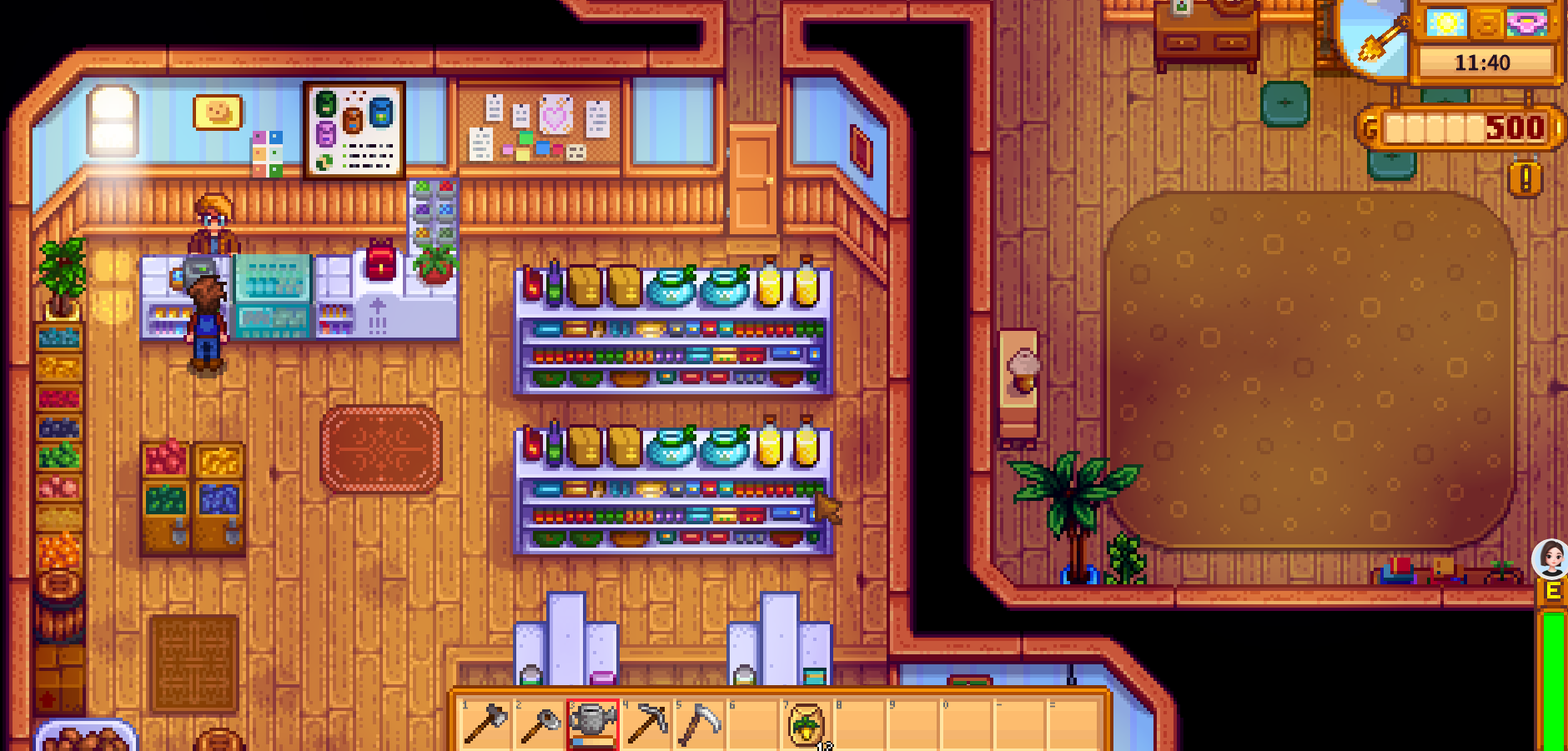
Game screenshot © ConcernedApe — used for guide commentary
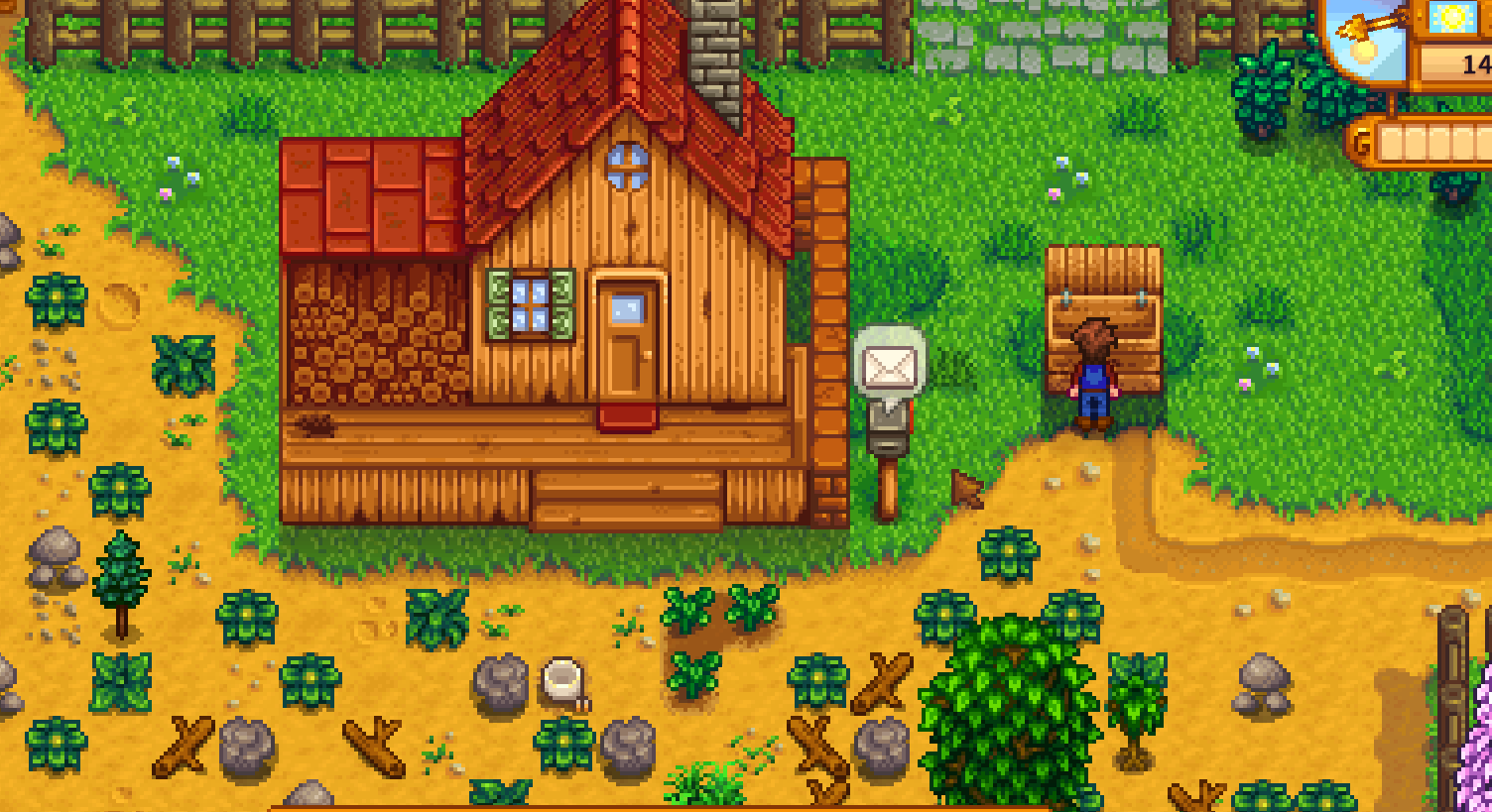
Game screenshot © ConcernedApe — used for guide commentary
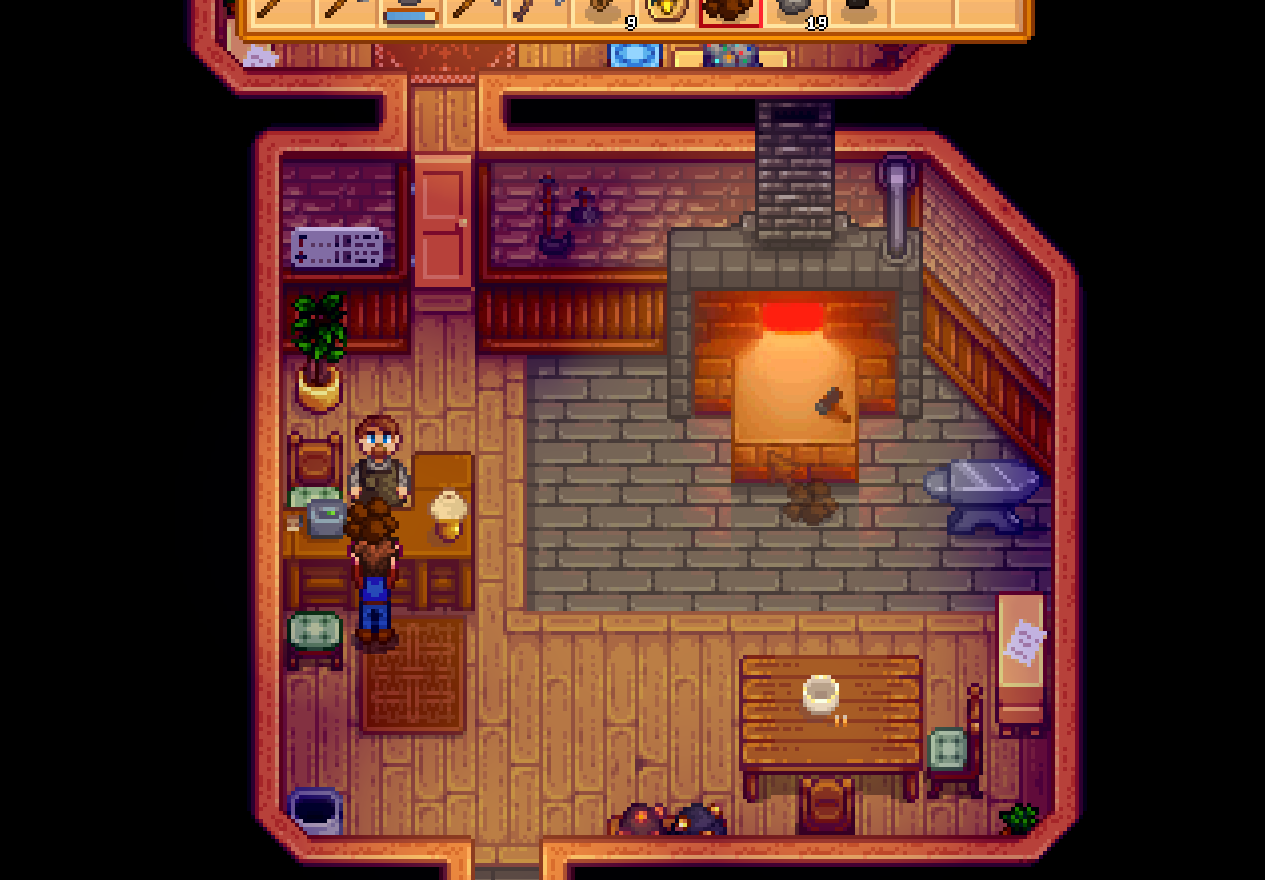
Game screenshot © ConcernedApe — used for guide commentary
How to run a money day (operations)
- Water the patch first. Dead crops are free losses.
- Grab forage on the walk to town; keep bundle candidates, sell obvious junk later via the bin.
- At Pierre’s, buy only what refills your real patch size.
- Leftover energy: rainy fishing or a short mine trip—not both until you know your bar.
- Before bed, ship extras. Gold arrives overnight—do not panic-sell unique items at 1am without checking bundles.
Pitfalls we stepped into (early money)
Short version of bruises from our Year 1 wallet—paired with the cash log above. More Spring-day stories live in the Spring pitfalls section.
- Giant field, empty energy. We cleared like a renovation show, then could not finish watering. Income stalled while the map looked “productive.”
- Autopilot shipping a bundle crop. One quality vegetable left in the bin that we later wanted for the Pantry. Now: chest first, ship duplicates.
- Cart almost-wipe. Mid-Spring we hovered on a Traveling Cart curiosity that would have erased several days of seed money. We walked away; the season buffer survived.
- Upgrade before the loop. A better tool felt like progress; an unwatered patch still paid nothing. Backpack when inventory hurt beat pickaxe FOMO on our file.
- Ending Spring at “looks rich, actually 0g.” Flex spending left no Summer seed cushion. The intentional late-Spring move was not spending.
Alternative variations
- Fishing-leaning: Tiny patch + rainy fishing focus. Trade: slower farm looks, steadier skill/cash on wet days.
- Mining-leaning: Same tiny patch; leftover energy into early floors for ore and geodes. Trade: more food management.
- Short-session: Water → ship → sleep. Expand only when mornings feel easy.
FAQ
Is fishing required for early money?
No. It is optional comfort income—especially on rainy days—after chores.
Should I buy animals immediately?
Not on day 1–5. Get a watered crop habit first; animals add morning chores.
Backpack or seeds first?
If you cannot pick things up, backpack. If the patch is empty, seeds. Whichever pain hits you today.
How does this connect to other guides?
Spring teaches the loop; Community Center teaches what not to sell blindly; this page teaches where gold should go.
Next steps / related pages
Unofficial fan guide. Not affiliated with ConcernedApe.